seaside inspiration.
concept.
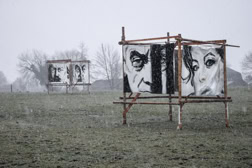
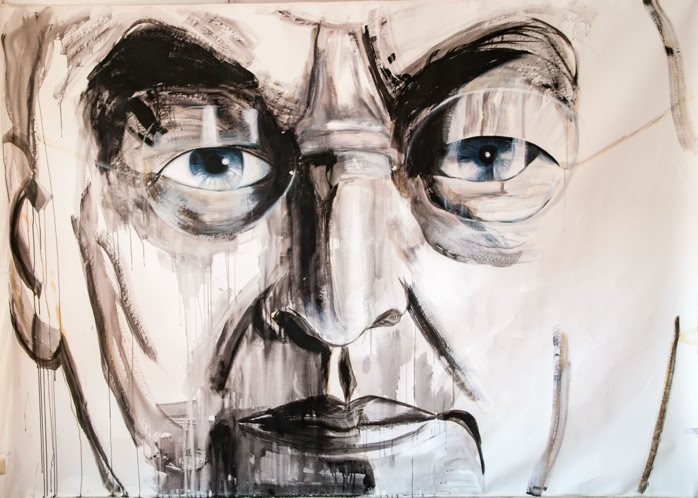
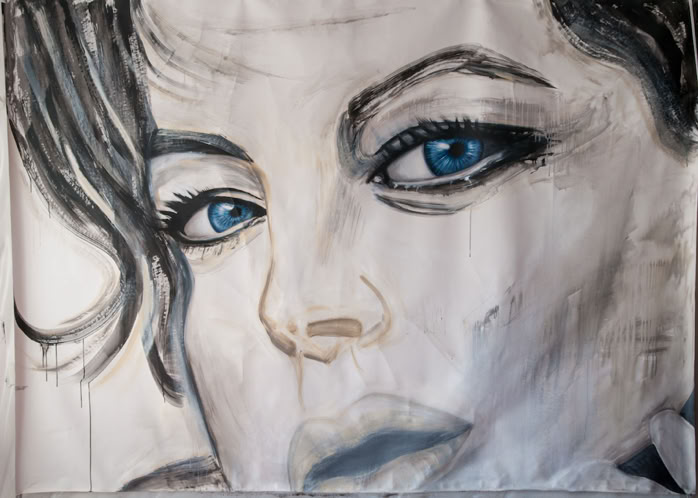
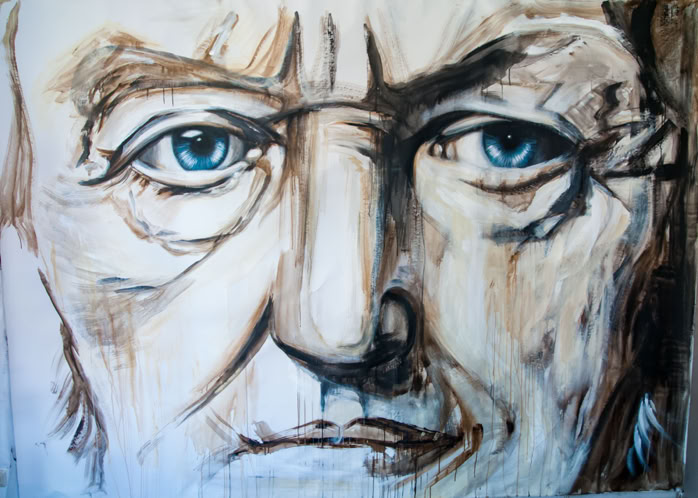
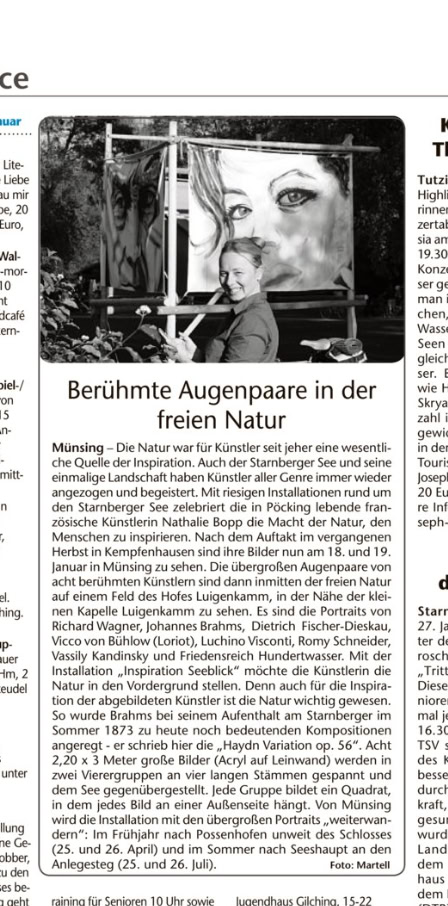
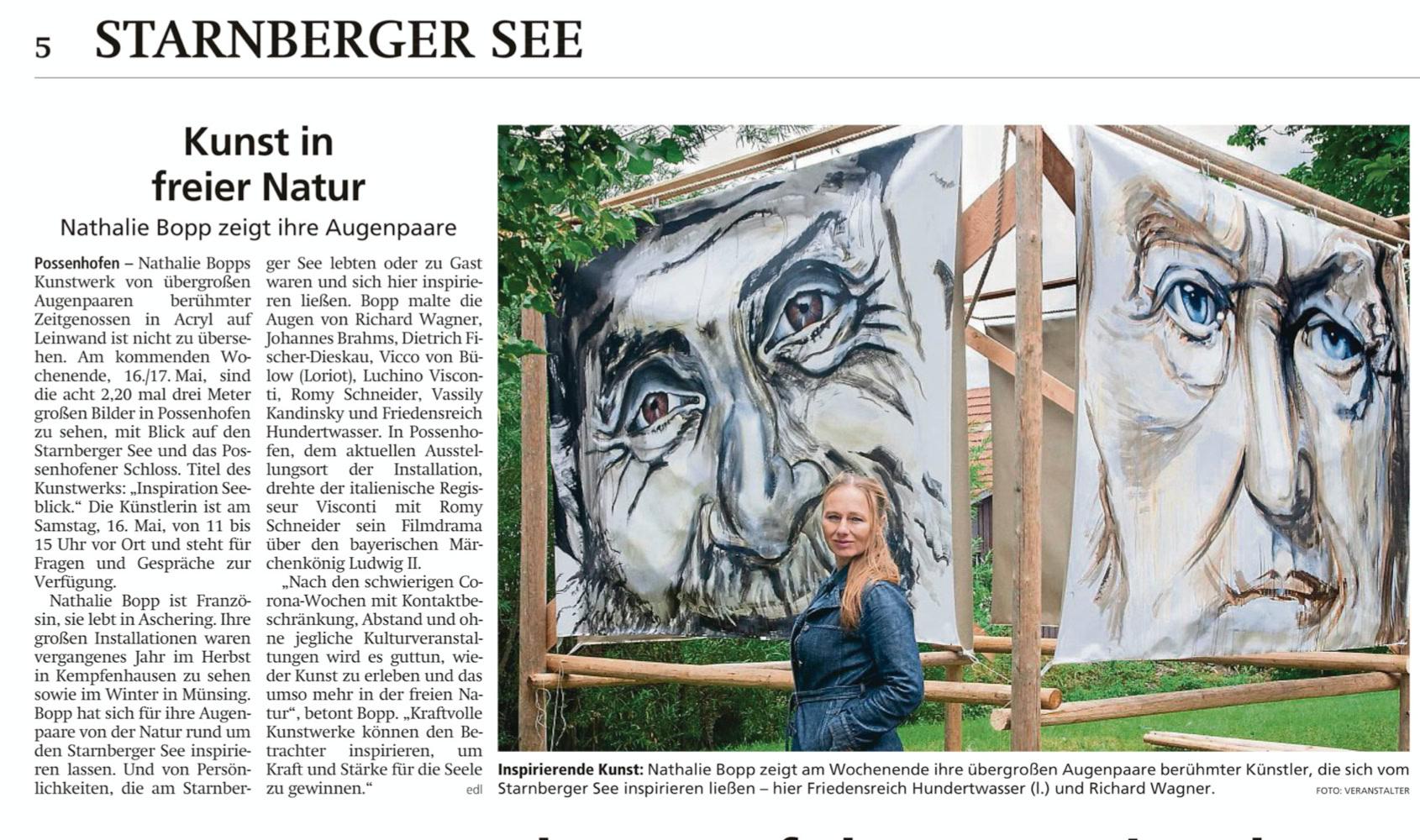
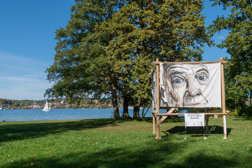
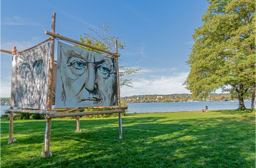
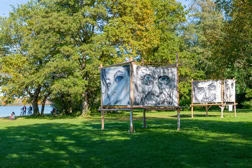
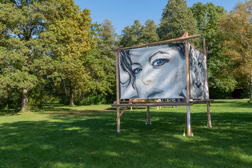
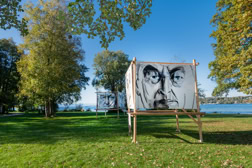
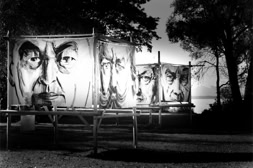
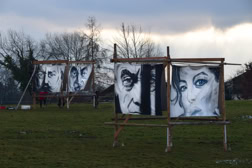
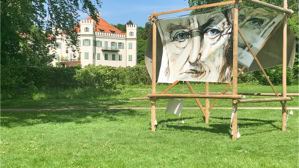
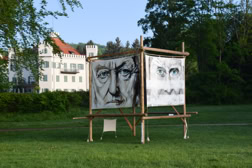
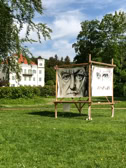
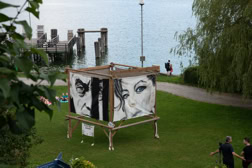
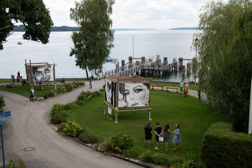
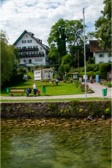
The installation celebrates the power of nature to inspire people. Large portraits of eight well-known artists who have spent time at the lake are set up in nature at four different points around the lake, in each of the four seasons.
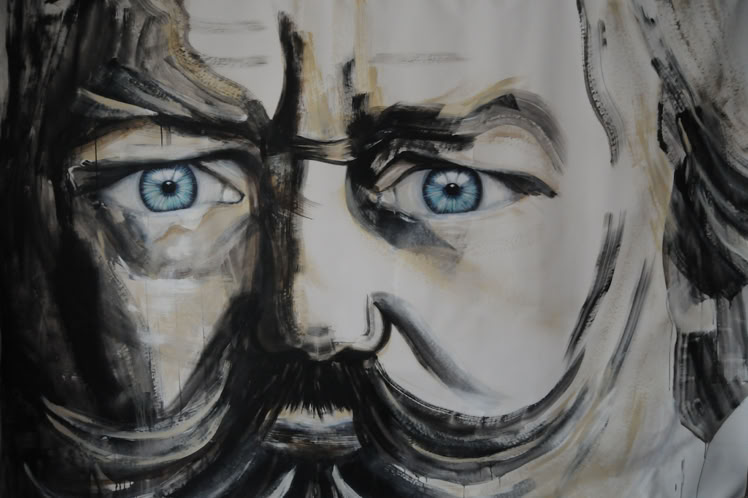
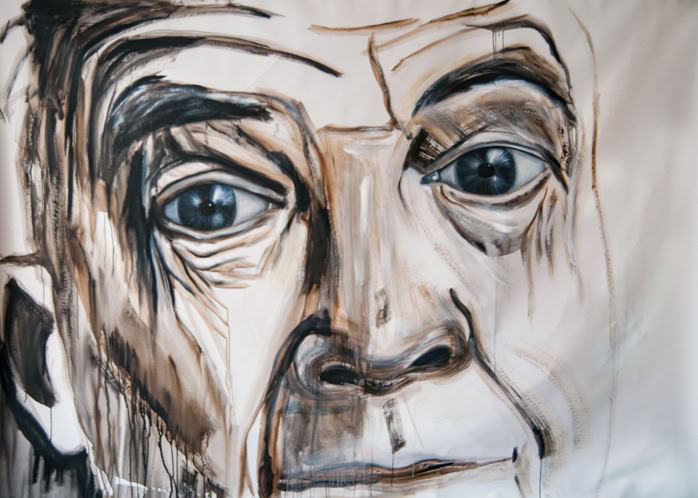
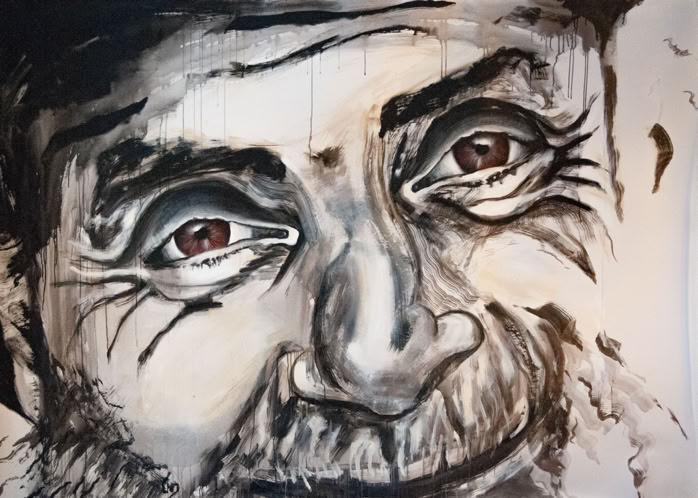
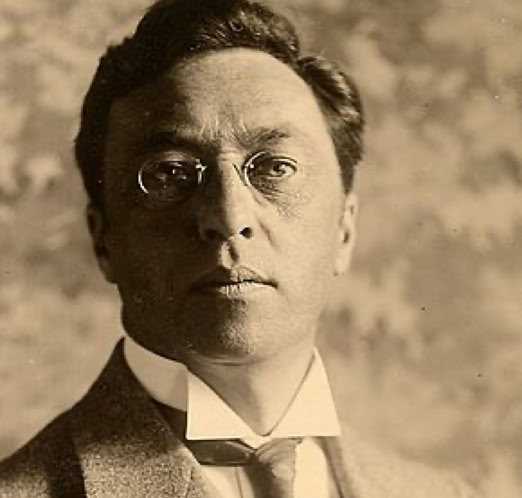
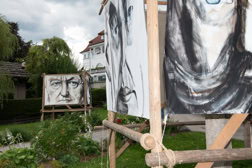
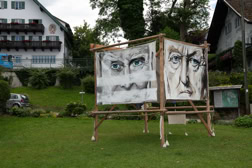
To be seen are the faces - with a special focus on the eyes - of Richard Wagner, Johannes Brahms, Dietrich Fischer-Dieskau, Loriot, Luchino Visconti, Romy Schneider, Vassily Kandinsky and Friedensreich Hundertwasser.
For artists, nature has always been an essential source of inspiration and the surroundings of Lake Starnberg have always attracted and inspired artists.
The installation is intended to inspire the viewer just as nature inspires the artist, and to motivate him to be a hero for sustainability and nature. The juxtaposition of the eight large paintings with the lake and its surroundings reminds us of two important things: nature has always been the source of our strength and always will be. At the same time, this nature needs our protection after we, through the power of our intellect, have become more and more detached from it.
30,000 years of inspiration around Lake Starnberg
People have been living on and from Lake Starnberg for around 30,000 years. Even today, the lake is an ecologically valuable system from which we all benefit greatly. It gives the region its special character. In other parts of the globe, people are not so lucky, wonderful nature is destroyed every day. The beauty of the lake and the installation encourage us to make even more efforts to preserve our entire planet and its unique nature.
works.
The works show the faces of eight artists. Artists need inspiration, are often sensitive and nature-loving people.
Art is the most irrational thing that man can produce. In this respect, it also symbolises the opposite of intellect. This is not to say that an artist does not perform intellectually. But it does indicate that the enjoyment of art is not intellectual work.
In this sense, the enjoyment of art and the enjoyment of an experience of nature are comparable. In this installation, the two are brought together, blend into one another. The viewer experiences the unity of art and nature and thus also the unity of man and nature. This happens unconsciously, beyond words and concepts. This is what the installation is meant to achieve.
The technique of the paintings is acrylic on canvas. The format is approx. 220 x 300 cm. On display are faces of people with a special focus on the gaze. The eyes are very carefully rendered, the rest of the face is painted with quick, almost careless brushstrokes. This makes the gaze even more intense.
Who were the artists who - like us - enjoyed the sight of the lake?
1833 -1897
Brahms lived and composed in Tutzing in the summer of 1873.
He found the inspiration for his works on long walks in nature, which was very important to him.
Dietrich Fischer-Dieskau
Opera singer
1925 - 2012
The world-famous baritone had his retirement home in Berg, where he also died.
He achieved fame through his outstanding interpretation of Schubert songs, in whose lyrics nature always plays a central role.
Friedensreich Hundertwasser
Artist
1928 - 2000
Hundertwasser's friendly relationship with Lothar Günther Buchheim led him to Lake Starnberg.
The painter was very attached to nature. Two quotes show this: "Nature is the only instance that can show man the beautiful way."
"It is your duty to help vegetation to its right by all means."
1866 - 1944
The pioneer of modernism painted the picture "Starnberger See" in 1908. It is certain that on 31 August 1911 he crossed the lake "in lederhosen" from Tutzing in the direction of Berg, where the composer Arnold Schönberg was waiting for him at the steam landing stage.
His favourite pastime was painting in nature.
1923 - 2011
The popular and witty Vicco von Bülow had chosen Ammerland on Lake Starnberg as his residence, where he also died.
"How do I winter my garden gnome?" With these and many other humorous pictures, Loriot showed his love for nature.
1938 - 1982
In 1972 Romy Schneider resumed her youthful role as Empress Elisabeth (Sissi). She came to Lake Starnberg with director Visconti and her colleague Helmut Berger as Ludwig II. Filming took place at Possenhofen Castle and on Roseninsel.
Luchino Visconti
Regisseur
1906 - 1976
For his film about Ludwig II, the great director chose original locations as far as possible. Of course, Lake Starnberg is also part of the life of the "Kini". In addition to Roseninsel, he also filmed at Schloss Possenhofen after being refused permission to film at Schloss Berg.
1813 - 1883
In the summer of 1864, his admirer Ludwig II invited Richard Wagner and his wife Cosima to Lake Starnberg and rented the Villa Pellet in Kempfenhausen for him.
In the composer's works, nature is omnipresent, not an abstract element but a living part of the plot.
press.